

Addiction is not just a physical problem—it deeply affects the mind, emotions, behaviour, relationships, and overall lifestyle of a person. For this reason, recovery is not possible through medicine alone. A huge part of successful recovery depends on the guidance, support, and expertise of counsellors working inside a Nasha Mukti Kendra.
Counsellors are the backbone of the entire de-addiction process. They guide patients through emotional pain, mental struggles, cravings, relationship issues, and the fears attached to starting a new life. In this detailed blog, we will understand the essential role counsellors play in helping a person overcome addiction and rebuild their life.
⭐ Who Is a Counsellor in a Nasha Mukti Kendra?
A counsellor is a trained mental health professional who helps addicted individuals:
Understand their addiction
Control cravings
Manage emotions
Handle stress
Identify triggers
Build discipline
Change behaviour
Heal mentally and emotionally
They act as guides, supporters, educators, motivators, and emotional companions during the entire recovery journey.
⭐ Why Counsellors Are Essential in Addiction Recovery
Addiction affects every part of a person’s life. Counsellors help solve problems that medicine cannot.
Medicines help with:
Detox
Withdrawal symptoms
Physical stability
But counsellors help with:
Emotions
Behaviour
Habits
Motivation
Triggers
Trauma
Mental strength
Without counselling, relapse becomes highly likely. Research shows 60–80% relapses happen due to emotional triggers, which only counselling can control.
⭐ 12 Major Roles of Counsellors in Addiction Recovery
Below are the most important roles counsellors play in helping patients achieve long-term sobriety.
1. Emotional Support During Detox
Detox is one of the toughest phases. Patients feel:
Fear
Restlessness
Anxiety
Irritation
Sadness
Hopelessness
A counsellor:
Talks to the patient daily
Calms the mind
Explains the process
Provides assurance
Reduces panic
Encourages the patient to continue
This emotional support during detox prevents breakdowns and keeps the patient stable.
2. Identifying the Root Cause of Addiction
Every addiction has a root cause. It may be:
Stress
Depression
Past trauma
Family problems
Relationship issues
Peer pressure
Loneliness
Work pressure
Counsellors help patients identify why addiction started in the first place.
Without finding the root cause, recovery is incomplete.
3. Helping Patients Understand Their Triggers
Triggers are situations that create cravings.
Some common triggers include:
Stressful situations
Old friends involved in addiction
Staying alone
Emotional pain
Anger or frustration
Bad environment
Counsellors help patients recognize their personal triggers and create strategies to avoid or manage them.
4. Teaching Craving Management Techniques
Cravings are one of the biggest reasons for relapse.
Counsellors teach life-saving methods such as:
Urge surfing
Delay and distract technique
Deep breathing
Positive self-talk
Mental grounding
5-minute rule
Lifestyle replacement activities
These techniques help patients stay in control even after leaving the center.
5. Providing Behavioural Therapy
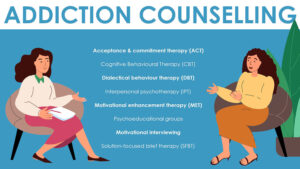
Counsellors use scientifically proven therapies such as:
CBT – Cognitive Behavioral Therapy
Helps change negative thoughts and behaviours.
DBT – Dialectical Behavioral Therapy
Helps control emotional outbursts, self-harm thoughts, and anger.
MI – Motivational Interviewing
Increases motivation to stay sober.
REBT – Rational Emotive Behavioral Therapy
Helps build healthy thinking patterns.
These therapies rewire the brain and support long-term recovery.
6. Supporting Patients Through Emotional Pain
Many patients have emotional wounds such as:
Childhood abuse
Relationship problems
Family conflict
Loss of loved ones
Career failure
Counsellors provide a safe space for emotional healing.
They listen without judgment and help patients rebuild emotional strength.
7. Rebuilding Self-Esteem and Confidence
Addiction destroys confidence. Patients often feel:
Useless
Guilty
Weak
Ashamed
Counsellors:
Encourage self-love
Help set goals
Motivate daily progress
Build positive mindset
Teach self-respect
These confidence-building sessions are crucial for long-term success.
8. Repairing Family Relationships
Addiction usually damages relationships. Families lose trust, communication breaks, and emotional distance increases.
Counsellors help through:
Family therapy
Conflict resolution
Communication training
Rebuilding trust exercises
When family support increases, recovery becomes stronger and quicker.
9. Creating a Personalized Recovery Plan
Each patient’s addiction is different.
Counsellors create a personalized plan based on:
Addiction history
Emotional condition
Family background
Work or study routine
Medical issues
Personal triggers
A customized plan ensures more effective recovery.
10. Relapse Prevention Training
One of the most important responsibilities of counsellors is to teach relapse prevention.
They help patients learn:
Early warning signs of relapse
How to handle cravings
How to avoid old habits
What to do during emotional breakdowns
How to stay strong in risky situations
Relapse prevention strategies save lives.
11. Helping With Lifestyle Transformation
Addiction recovery is not just about quitting substances—it is about changing the lifestyle.
Counsellors help patients develop a new life routine that includes:
Healthy eating
Proper sleep
Yoga or meditation
Exercise
New hobbies
Productive habits
Structured day plans
This lifestyle transformation supports long-term sobriety.
12. Continuous Motivation & Follow-Up After Leaving the Center
The real challenge begins after a patient leaves the Nasha Mukti Kendra.
Counsellors stay in touch through:
Follow-up calls
Weekly sessions
Relapse prevention check-ins
Emotional support meetings
This constant guidance helps patients remain strong even after reentering society.
⭐ Types of Sessions Conducted by Counsellors
1. Individual Counselling
One-on-one sessions that focus on personal healing.
2. Group Counselling
Patients share experiences and learn from each other.
3. Family Counselling
Improves relationships and builds support.
4. Motivational Counselling
Boosts inner strength and hope.
5. Trauma Counselling
Heals emotional wounds from the past.
Each type plays a vital role in the recovery journey.
⭐ Qualities of a Good Addiction Counsellor
A good counsellor must have:
Patience
Empathy
Strong communication
Non-judgmental approach
Emotional stability
Understanding of addiction psychology
Problem-solving skills
These qualities help patients trust and open up during therapy.
⭐ How Counsellors Transform Patients’ Lives
Counsellors help patients:
✔ Understand their emotions
✔ Break toxic habits
✔ Create a new identity
✔ Stay motivated
✔ Build purpose
✔ Develop discipline
✔ Improve mental health
✔ Regain confidence
✔ Reconnect with family
✔ Reinvent life after addiction
Their work becomes the central pillar of recovery.
⭐ Why Counselling Is a Lifeline in Nasha Mukti Kendra
Medicines can treat the body—counsellors treat the mind
Doctors stabilize physical health—counsellors strengthen emotional health
Rehabilitation gives structure—counsellors create transformation
Addiction recovery is complete only when the patient heals emotionally, mentally, and socially—and counsellors make all this possible.
⭐ Conclusion
Counsellors play one of the most powerful and life-changing roles in addiction recovery. Their guidance, therapies, motivation, and emotional support help patients rebuild their lives from the ground up. Without counselling, recovery remains incomplete and unstable.
A good counsellor not only helps a patient quit addiction—they help them rediscover purpose, confidence, relationships, and a new life filled with hope and discipline.


Leave A Comment