

Addiction and stress are deeply connected. For many people, addiction begins as a way to escape stress, but over time, it actually creates more stress, trapping individuals in a painful loop. Whether it’s drugs, alcohol, smoking, or even digital addiction, stress plays a major role in both the cause and continuation of substance abuse.
In this blog, we’ll explore how stress fuels addiction, how addiction worsens stress, and what effective steps — practiced at Nasha Mukti Kendras and rehabilitation centers — can help break this destructive cycle permanently.
Understanding Stress: The Silent Trigger
Stress is the body’s natural reaction to challenges, threats, or pressure. It’s normal in small doses — it keeps us alert and motivated. But when stress becomes chronic or overwhelming, it disrupts both physical and emotional balance.
Common causes of chronic stress include:
Financial struggles
Relationship conflicts
Job pressure or unemployment
Family issues
Health concerns
Loss and grief
When a person feels trapped by stress, they often look for temporary relief — and that’s where addiction begins.
How Stress Leads to Addiction
Stress affects the brain’s reward system — the same system influenced by addictive substances. When someone uses alcohol, drugs, or nicotine, it releases dopamine, the “feel-good” chemical. This creates short-term relief, calmness, and escape.
But soon, the brain starts to associate stress relief only with that substance or behavior.
Over time:
The brain demands more of the substance to feel normal.
Natural coping mechanisms (like talking, relaxing, or exercising) weaken.
The person becomes dependent on the addiction to handle even small stresses.
Thus, a dangerous cycle begins — stress leads to addiction, and addiction increases stress.
The Science Behind the Stress-Addiction Loop
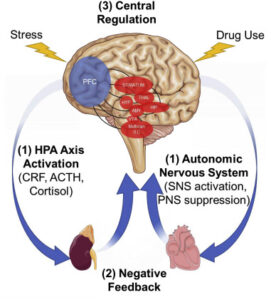
When we’re stressed, the body releases cortisol and adrenaline — stress hormones that prepare us for “fight or flight.”
In small amounts, this is healthy. But when stress is constant, these hormones damage brain regions that control decision-making and emotions — especially the prefrontal cortex.
As this area weakens:
Impulse control decreases.
Emotional stability breaks down.
Addictive urges become stronger.
This is why people often relapse or fall deeper into addiction during periods of high stress.
How Addiction Increases Stress
Addiction may start as an escape from stress, but it quickly creates more problems than it solves.
Here’s how addiction worsens stress levels:
Financial Problems – Spending on alcohol or drugs leads to debt and anxiety.
Relationship Damage – Loss of trust and constant arguments increase emotional strain.
Health Decline – Physical illness and fatigue increase stress further.
Work Issues – Job loss or poor performance cause guilt and fear.
Mental Chaos – Guilt, depression, and paranoia amplify stress hormones.
Eventually, the person feels mentally and emotionally exhausted, caught in a cycle of stress, use, and regret.
Recognizing the Signs of Stress-Induced Addiction
If you or someone you know turns to substances during stressful times, look for these warning signs:
Using alcohol or drugs to relax or sleep
Avoiding problems instead of solving them
Sudden mood swings or irritability
Feeling restless or hopeless without using
Isolating from family or friends
Neglecting responsibilities
Recognizing the pattern early is the first step toward breaking it.
Breaking the Cycle: How Nasha Mukti Kendras Help
At professional Nasha Mukti Kendras (De-Addiction Centers), the approach to recovery is holistic — treating both addiction and stress together.
Here’s how they help patients regain mental balance and self-control:
1. Stress Management Therapy
Therapists teach relaxation techniques to calm the nervous system naturally — such as:
Deep breathing exercises
Progressive muscle relaxation
Visualization techniques
Gratitude journaling
These methods train the brain to handle stress without substances.
2. Cognitive Behavioral Therapy (CBT)
CBT helps identify negative thought patterns that cause both stress and addiction.
Example:
“I can’t handle my problems” becomes “I can handle one step at a time.”
By changing perception, the brain learns new ways to handle tension and anxiety.
3. Yoga and Meditation
Yoga helps relax the body, while meditation helps relax the mind. Together, they reduce stress hormones and increase emotional resilience.
Daily yoga sessions in rehabilitation centers help improve:
Emotional stability
Focus and patience
Physical detoxification
Meditation helps patients pause, reflect, and respond calmly instead of reacting impulsively.
4. Group Counseling and Peer Support
Sharing experiences with others who have faced similar struggles provides emotional relief. It replaces isolation with connection — one of the strongest stress buffers.
Hearing recovery stories gives patients hope and practical coping ideas.
5. Art, Music, and Recreational Therapy
Creative outlets like drawing, music, or sports act as healthy ways to release stress and emotions.
Art therapy helps express feelings that words often can’t. Music therapy calms the mind and improves mood — it’s a powerful alternative to harmful habits.
6. Balanced Nutrition and Exercise
Poor diet and lack of activity increase fatigue and irritability. Rehabilitation centers provide:
Nutritious meals rich in vitamins and minerals
Regular physical activities like walking, running, or dancing
Exercise releases endorphins — the body’s natural stress relievers — creating a sense of happiness and calm.
7. Spiritual and Emotional Healing
Faith-based sessions or mindfulness programs help individuals reconnect with inner peace. Many centers include prayer, chanting, or spiritual discussions that strengthen emotional stability.
This inner connection replaces anxiety with acceptance and confidence.
Practical Tips to Manage Stress Without Substances
Even outside of rehab, anyone can practice these daily habits to keep stress under control:
Identify Triggers – Notice situations or emotions that increase tension. Avoid or prepare for them.
Build a Routine – Regular sleep, meals, and exercise keep your body and mind stable.
Talk About It – Share feelings with friends, family, or counselors instead of suppressing them.
Practice Gratitude – Focus on what’s good rather than what’s missing.
Limit Stimulants – Reduce caffeine, sugar, and nicotine. They worsen anxiety.
Engage in Hobbies – Reading, gardening, or music can release positive energy.
Digital Detox – Step away from screens and social media to rest your mind.
The Role of Family and Society
Breaking the stress-addiction cycle is easier when families and communities offer understanding, not judgment.
Family members can help by:
Listening without criticism
Encouraging therapy or rehab
Creating a calm, stable home environment
Celebrating small recovery milestones
Community awareness programs, schools, and workplaces should also promote mental health and stress education to prevent addiction at its roots.
Real-Life Inspiration
Example:
Rohit, a 35-year-old marketing executive from Nagpur, began drinking heavily to handle work stress. Over time, it damaged his career and marriage. At a local Nasha Mukti Kendra, he learned deep breathing, mindfulness, and CBT techniques.
Today, Rohit manages stress through yoga and journaling — proving that once you control your stress, you control your life.
Conclusion
The link between stress and addiction is powerful but not unbreakable. Every time you choose to breathe deeply, talk openly, or meditate instead of using a substance, you weaken that cycle.
Rehabilitation centers, therapy, and mindfulness don’t just treat addiction — they teach resilience, helping individuals face life’s challenges without fear or dependency.
Stress is inevitable, but addiction is not.
With awareness, support, and self-care, anyone can break free and build a peaceful, healthy life again.


Leave A Comment